Se Habla Español
Call Today for a Free Consultation
203-348-5846
1100 Summer Street, Stamford, CT 06905





Basement Classification Disputes in Connecticut Home Sales
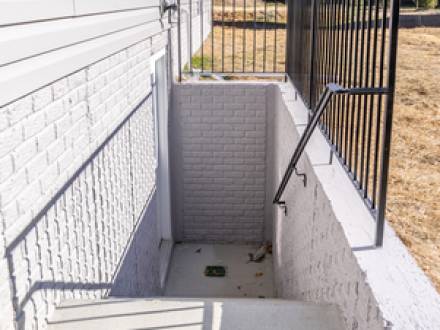 In Connecticut, whether a space is legally considered a "basement" or a "living area" can dramatically affect appraisal value, property taxes, and marketability. Even those who understand this concept may not fully comprehend that a basement’s classification is determined by the grade plane, which, in its simplest form, means how much of a level is above ground.
A Connecticut real estate closing can stall out on grade plane when a buyer believes he or she is purchasing a home with 3,000 square feet of living space, only to find the appraiser dramatically reduced that number by deeming part of the home "below grade." Since basement classification depends solely on the grade plan rather than the quality of the finishes, thousands of square feet can potentially be excluded from the home’s valuation.
Even a "walkout basement" that feels like a first floor can be considered below grade for appraisal and zoning purposes. When this occurs, a loan approval can be in jeopardy, a contract may need to be renegotiated, or the deal may fall apart entirely. An experienced Fairfield County, CT real estate lawyer can help buyers and sellers understand grade plane and how it could affect their current real estate deal.
What is "Grade Plane" in Connecticut Real Estate?
For Connecticut real estate purposes, the grade plane is the average of the finished ground levels around the building. The calculation of the grade plane is based on the final, finished ground elevation around the structure. For a flat site, the grade plane is the elevation of the finished ground where it meets the building’s exterior walls. A sloped site is more detailed, involving taking several elevation measurements around the entire perimeter of the building and averaging them.
The number of measurement points will depend on the irregularity and steepness of the slope. The primary use of the grade plane is to distinguish a basement from a story above grade plane. A story is considered "above grade plane" if the finished floor surface is more than 6 feet above the grade plane, or more than 12 feet above the finished ground level at any point. Grade plane determines whether a finished floor is a basement, a first-floor living level, or a walkout lower level.
The Differences Between a Below-Grade Basement and an Above-Grade Living Area
An area is considered a basement if more than 50 percent of the wall height is below grade, or a living area if more than 50 percent of the wall height is above grade. A basement is not included in the living area's square footage, while an above-grade living area is. The value per square foot of a basement is generally from 30 to 60 percent of the above-grade value.
For property tax purposes, a basement may be taxed as a finished area if the assessor deems it "habitable, even when an appraiser disagrees. A basement cannot be advertised as "living area" when selling a home; it must be called a "lower level" or "finished basement." Although finishing a basement increases usability – and likely property taxes – it does not necessarily increase appraised value, while renovations to above-grade living areas materially increase market value.
Why a Walkout Basement May Still Be Classified as a Basement
If less than 50 percent of the wall height is above grade, or only one side is fully exposed (walkout), and the other sides are still below grade, it could be classified as a basement. The ceiling height in a basement could also fail to meet habitable space requirements. A walkout basement would be considered an above-grade living area if at least two sides have full daylight exposure, more than 50 percent of the exterior wall height is above grade, and it meets egress (Section R-309 of CT Building and Fire Safety Codes), ventilation, and emergency exit requirements.
Contact a Stamford, CT Residential Real Estate Lawyer
Grade plane disputes can derail sales, inflate property taxes, and reduce appraisal values for homeowners in Connecticut. Speaking to a highly skilled Fairfield County, CT real estate attorney from Law Offices of Daniel P. Weiner can provide you with the information you need to make a solid real estate deal. Call 203-348-5846 to schedule your free consultation.
The Law Offices of Daniel P. Weiner in Stamford, Connecticut serves clients in Greenwich, Norwalk, New Canaan, Darien, Westport, Bridgeport, Fairfield, Danbury, Wilton and clients throughout Fairfield County and across Connecticut (CT).
©2026 Law Offices of Daniel P. Weiner | 1100 Summer Street, Stamford, CT 06905 | 203-348-5846
Call for Free Initial Consultation
203-348-5846