Se Habla Español
Call Today for a Free Consultation
203-348-5846
1100 Summer Street, Stamford, CT 06905



Fighting a DUI Charge in Connecticut
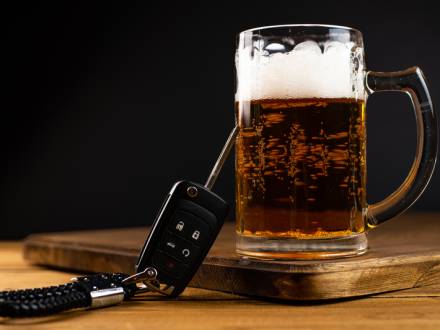
Fighting a DUI in Connecticut often starts with looking closely at the evidence against you and whether the State can prove its case. The State has to prove the charge, and the evidence against you can be challenged. If you’re facing DUI charges and possibly losing your license in 2026, our Fairfield County, CT criminal defense lawyer can help you build a case to challenge the charges.
What Does the Prosecutor Have to Prove in a Connecticut DUI Case?
Under Conn. Gen. Stat. § 14-227a, prosecutors have two separate routes to a DUI conviction. The first is based on a chemical test showing a blood alcohol concentration (BAC) of 0.08 or higher. This can establish that a driver was over the legal limit, with no further evidence of impairment required. For commercial vehicles, the limit is 0.04. Prosecutors must also prove that the person operated the vehicle.
The second route to conviction requires no BAC number. It applies when a person operated a motor vehicle while under the influence of alcohol, drugs, or both. In these cases, the State can use what the officer saw, such as how the person was driving, speaking, or performing on roadside tests.
A case built on a breath result is challenged differently than one built entirely on what an officer saw.
How Do You Challenge the Traffic Stop in a Connecticut DUI?
Police need reasonable suspicion supported by specific facts to pull you over. That usually comes from a traffic violation, equipment problem, or driving pattern the officer can describe. A vague claim that a car seemed suspicious does not satisfy it.
If police had no legal reason to stop you, evidence collected afterward may be excluded from your case. This can include the field sobriety tests, your statements, and the chemical result. If the court excludes important evidence, the case is harder for prosecutors to prove.
Dash and body camera footage can be important when challenging a traffic stop. For example, the video might not match the driving behavior described in the police report. An attorney can use the footage to argue that police did not have a legal reason to make the stop.
DUI checkpoints have different rules. Police must use a fair system for deciding which cars to stop and cannot keep drivers longer than necessary.
Can You Challenge Field Sobriety Test Results in Connecticut?
Field sobriety test results can also be challenged. An attorney can look at how the officer gave the test and whether the proper steps were followed.
These tests come with national standards covering how instructions are delivered, whether a demonstration is required, what counts as an error, and the conditions under which the tests were validated. If an officer gives unclear instructions or performs the test incorrectly, an attorney can question how reliable the results are.
The conditions around you when you took the tests are important too. For example, a sloped shoulder, gravel, rain, cold, passing traffic, and headlights all affect performance. So do dress shoes, age, weight, injuries, inner ear problems, and ordinary nervousness.
A poor performance on a field sobriety test does not always mean a person was impaired. Video footage can also help show whether the officer’s report matches what actually happened.
How Can You Attack a Breath or Blood Test in a Connecticut DUI Case?
Breath and blood test results are not always accurate. An attorney can review how the tests were performed and look for problems that could affect the results.
Common issues include:
- Breath testing equipment: Machines must be approved and checked for accuracy. Officers must also be certified to use them.
- Testing procedures: Police must follow rules for observing drivers before testing and waiting between tests. If police do not follow the required testing rules, an attorney can challenge whether the results should be used in court.
- Blood sample handling: Errors in collecting, storing, or testing blood samples can affect the results.
- Timing of the test: Alcohol levels can continue to rise after driving. A later test may not reflect the driver's alcohol level while behind the wheel.
An attorney can use these issues to challenge the test results and determine whether they should be admitted as evidence.
Schedule a Free Consultation With Our Stamford, CT DUI Defense Attorney
Attorney Daniel P. Weiner brings 40 years of legal experience to Connecticut DUI cases. Important evidence can include breath test records, officer training records, and police video. An attorney can request and review this evidence for problems that could affect the case.
Contact Law Offices of Daniel P. Weiner at 203-348-5846 to talk to our Fairfield County, CT criminal defense lawyer today.
The Law Offices of Daniel P. Weiner in Stamford, Connecticut serves clients in Greenwich, Norwalk, New Canaan, Darien, Westport, Bridgeport, Fairfield, Danbury, Wilton and clients throughout Fairfield County and across Connecticut (CT).
©2026 Law Offices of Daniel P. Weiner | 1100 Summer Street, Stamford, CT 06905 | 203-348-5846
Call for Free Initial Consultation
203-348-5846