Se Habla Español
Call Today for a Free Consultation
203-348-5846
1100 Summer Street, Stamford, CT 06905





Recent Blog Posts
Can I Get My Child’s Criminal Record Expunged in Connecticut?
 Your child's criminal record can be erased in Connecticut if the case meets certain legal requirements. Connecticut uses the term erasure rather than expungement, and your child's eligibility depends on how the case was handled.
Juvenile cases, youthful offender cases, and adult convictions follow different rules. Some records are erased without a request, while others require court action. If you want to clear your child's record in 2026, a Stamford criminal defense lawyer can explain the available options.
What Does Criminal Record Erasure Mean in Connecticut?
When a record is erased, the proceedings are treated as though they never happened for most legal purposes. Connecticut law requires police, courts, and other agencies to remove references to erased proceedings from their official records. The person is legally treated as never having been arrested for those proceedings.
Fighting a DUI Charge in Connecticut

Fighting a DUI in Connecticut often starts with looking closely at the evidence against you and whether the State can prove its case. The State has to prove the charge, and the evidence against you can be challenged. If you’re facing DUI charges and possibly losing your license in 2026, our Fairfield County, CT criminal defense lawyer can help you build a case to challenge the charges.
What Does the Prosecutor Have to Prove in a Connecticut DUI Case?
Under Conn. Gen. Stat. § 14-227a, prosecutors have two separate routes to a DUI conviction. The first is based on a chemical test showing a blood alcohol concentration (BAC) of 0.08 or higher. This can establish that a driver was over the legal limit, with no further evidence of impairment required. For commercial vehicles, the limit is 0.04. Prosecutors must also prove that the person operated the vehicle.
Can a Home Sale Fall Through Because of a Property Boundary Dispute?

A boundary dispute can absolutely derail a home sale. It usually happens at the worst moment, after inspections are done and the closing date is set. The problem is usually that a title insurer might refuse to cover problems caused by the boundary dispute. A lender may also refuse to fund the purchase until the title problem is resolved.
Most of these situations are fixable, but they take time that a contract may not allow. If a survey turned up a problem with your sale in 2026, a Fairfield County, CT residential real estate lawyer can tell you which fix fits your timeline.
What Boundary Problems Can Show Up Before Closing on a House?
Boundary problems surface when a survey is ordered, which is often the first time anyone has measured the property in decades. Common findings include:
- A fence, wall, or hedge sitting several feet onto the neighbor's land
What Are Your Rights Regarding Connecticut DUI Checkpoints?
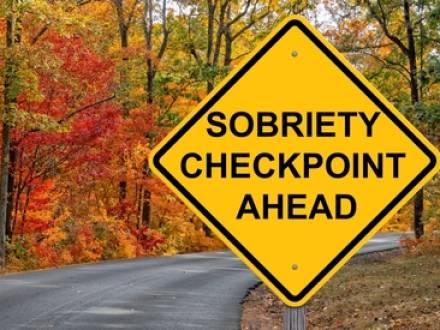 During a Connecticut DUI checkpoint, you have to stop and hand over your license, registration, and insurance. Beyond that, there is very little else that you have to do. Police also have to follow specific rules when setting up a checkpoint. If they don’t, any consequences you face from the stop may be null.
If you were arrested at a DUI checkpoint in 2026, a Stamford, CT criminal defense lawyer can examine how that operation was actually run.
What Procedures Do Police have to Follow at a Connecticut DUI Checkpoint?
DUI checkpoints are legal in Connecticut, but police must operate them in a way that satisfies constitutional requirements. State Police guidelines include:
- Advance approval of the site by a senior police official, usually a troop commander
- A supervisor present at the location to make decisions
- A neutral formula determining which vehicles get stopped, such as every car or every third car
Understanding Juvenile Property Damage in Connecticut
 Juvenile property damage in Connecticut is usually charged as criminal mischief, and the case typically goes to the Superior Court for Juvenile Matters instead of adult court. The seriousness of the charge depends on the amount of damage and the behavior involved. Parents also face separate questions about money, because state law can hold them responsible for part of the cost.
If your child is facing a criminal charge in 2026, our Fairfield County, CT juvenile property damage defense lawyer can help you sort out which path this case is on. Attorney Daniel P. Weiner brings 40 years of legal experience to these cases.
What Counts as Property Damage in Connecticut?
Connecticut has four degrees of criminal mischief. Under Connecticut General Statutes § 53a-115, damaging someone's property on purpose when the loss is more than $1,500 is criminal mischief in the first degree, a Class D felony. Under § 53a-116, damage over $250 can be criminal mischief in the second degree, a Class A misdemeanor.
Are DUI Laws Different for CDL Drivers in Connecticut?
 Connecticut treats commercial driver's license holders far more strictly than other drivers when it comes to DUI charges. A lower blood alcohol limit applies to CDL holders. The penalties can cost you your livelihood, not just your freedom, and some options other drivers have simply aren't available to you.
If you drive for a living and are facing a DUI charge in 2026, our Stamford, CT DUI defense lawyer can help you fight the charge and defend your license.
What BAC Limit Applies to CDL Holders in Connecticut?
Under Connecticut General Statutes Section 14-227a, most drivers are considered to have an elevated blood alcohol content at 0.08 percent. But commercial drivers are held to half that limit (0.04 percent) while operating a commercial vehicle. This means a CDL holder can be charged with a DUI after far less alcohol than it would take to charge someone driving a personal vehicle.
Can a Buyer Sue a Seller for Breaching a Residential Real Estate Contract?
 In Connecticut, a buyer can sue a seller for breaching a residential real estate contract. This generally applies if the seller failed to follow through on the agreed terms of the sale. You’ve invested time and money into the purchase process. When the seller doesn’t follow through, contact Law Offices of Daniel P. Weiner to learn more about your legal options in 2026. Our Fairfield County, CT real estate lawyer has 40 years of legal experience to offer.
What Counts as a Breach of Contract in a Connecticut Real Estate Deal?
A breach happens when one party fails to do what the contract requires them to do. In a real estate deal, this can look like a seller backing out of the sale entirely. It can also mean refusing to make agreed-upon repairs. Or it could mean failing to disclose known defects in the property.
Connecticut law requires sellers to disclose certain information about residential property. Under Connecticut General Statutes Section 20-327b, sellers generally must provide a residential property condition disclosure report to a prospective buyer before the buyer signs a purchase agreement. However, the law includes exceptions for certain types of property transfers. Failing to disclose certain known defects can create liability beyond a simple breach of contract claim.
Can I Prove the Police Had No Reason to Pull Me Over for a DUI?
 You can potentially prove the police had no reason to pull you over for a DUI. If you succeed, this can lead to your entire case being thrown out. Any evidence gathered after an illegal stop generally can't be used against you. But how do you prove that?
If you're facing DUI charges in 2026, our Stamford, CT DUI defense lawyer can help you challenge the traffic stop and fight for your case.
What Legal Standard Must Police Meet to Stop Your Car in Connecticut?
Police need what's called reasonable suspicion before they can legally pull you over for driving under the influence, an offense defined under Connecticut General Statutes Section 14-227a. DUI charges depend heavily on evidence gathered during and after a traffic stop. This means the legality of that initial stop is critical to your entire case.
Will Your Child Go to Jail If They Are Accused of a Crime?
 Your child likely won't go to jail if they're accused of a crime in Connecticut. The juvenile justice system focuses primarily on rehabilitation rather than punishment. That means detention is generally reserved for the most serious cases. This is a frightening time for any parent. Understanding how the process actually works can help ease some of the uncertainty you're feeling right now.
If your child is facing an accusation in 2026, our Fairfield County, CT juvenile defense lawyer can help you understand what to expect. Attorney Daniel P. Weiner brings 40 years of legal experience to these cases.
How Is the Juvenile Justice System Different From Adult Court in Connecticut?
Connecticut's juvenile justice system operates under a different philosophy than the adult criminal system. Under Connecticut General Statutes Section 46b-121, accountability is part of the juvenile justice system. But there is a strong focus on prevention efforts and programs designed to stop repeat offenses. This is different from adult criminal proceedings, which often focus primarily on punishment.
Was Your DUI Arrest Caused by a Medical Condition?
 Certain medical conditions can cause symptoms that mimic intoxication. This can lead to a wrongful DUI arrest even when you haven't had any alcohol or drugs. Conditions like diabetes, epilepsy, and certain neurological disorders can affect speech, balance, and behavior. Police officers sometimes mistake these effects for impairment.
If you believe a medical condition led to your DUI arrest in 2026, our Stamford, CT criminal defense lawyer can help you gather the right evidence to challenge the charge.
What Medical Conditions Can Mimic Signs of Intoxication?
Several health conditions can cause symptoms that look a lot like drunk driving to an untrained eye. Diabetes is one of the most common examples. Low blood sugar can cause slurred speech, confusion, and poor coordination. These symptoms closely resemble the signs officers are trained to look for during a DUI stop.
The Law Offices of Daniel P. Weiner in Stamford, Connecticut serves clients in Greenwich, Norwalk, New Canaan, Darien, Westport, Bridgeport, Fairfield, Danbury, Wilton and clients throughout Fairfield County and across Connecticut (CT).
©2026 Law Offices of Daniel P. Weiner | 1100 Summer Street, Stamford, CT 06905 | 203-348-5846
Call for Free Initial Consultation
203-348-5846